
What Every Agent Wants
“…stories, written with an unforgettable voice.” (Amanda Leuck, Spencerhill Associates)
“…stories with a strong voice.” (Danielle Burby, HSG)
“…an engaging voice.” (Patricia Nelson, Marsal Lyon Agency)
“Definitely a voice. Everything else we can work with but a voice comes straight from the heart of the writer and is how the connection between writer and reader is formed. (Camilla Wray, Darley Anderson Agency)
 It would help, wouldn’t it, if agents were a tiny bit more specific? We’ve got questions, lots and lots of them.
Exactly What is Voice?
Q: So they each said they want “a” voice? As in only one? But I have multiple POV’s, and they’re all different. Does that mean I don’t have the kind of voice they want?
Q: Maybe they’re talking about an omniscient narrator’s voice? But I’m writing in first person, present tense and don’t have a narrator. Does that mean I don’t have a voice at all?
Agent Whitley Abell, Inklings Literary Agency, in an interview with Martina Boone for Adventures in Children’s Publishing, had this answer for the central question:
Q: Can you define voice for us?
“This is so hard because voice is intrinsic and can’t be taught. Voice is the author’s style of writing, the quality that makes their writing unique, met with the tone with which the author has approached the story. It’s the way the story is told. It’s the rhythm of the words and the personality of both the author and the narrator showing through. It’s the individual way of thinking, what you believe and how you form that thought, unprompted and uncensored. It is so intrinsic and so unteachable that it’s difficult to describe and everything I think to say feels overreaching and yet not nearly enough. But to me, just as  your “real” speaking voice is natural, and is often toned down or changed in various social situations, the voice in writing is the natural way in which the writer sets about telling the story, and I greatly admire authors who have the courage and the strength to let their natural voice shine through. You can’t learn it, and you can’t copy it (trust me, I’ve seen writers try), but you can hone it. Practice peeling all the untrue parts of yourself away and putting yourself, raw and bared, on the page. Listen to the way they sound, feel, taste, and find the rhythm that speaks for you and your characters.”
“The Natural Way in Which the Writer Sets About Telling the Story”
Natural. No pretense or elaborate construction. It’s how the world looks to you. What’s important and what’s not. What’s good and what’s bad. The values and beliefs you hold dear and the ones that drive you crazy. The things that can’t help but infuse your writing… if you let them.
If Janet Evonavich had a Masters degree in Criminology, grew up in a Swiss boarding school, had been married to her childhood sweetheart for twenty years, and now lived in a highr ise penthouse in D.C., her stories would look and sound completely different from the ones we know. Evonavich’s writing suits not only Stephanie Plum, but the world the author knows and describes in passing, the problems she sees (and doesn’t see), her prejudices and enthusiasms, her attitudes and fears, and everything else that goes into making her the author she is. The author who isn’t afraid to show us her natural voice.
Imagine if Kate Middleton, Duchess of Cambridge and the focus of millions of paparazzi, wrote a poem called, “I Know Why the Caged Bird Sings.” It might be the same general subject, brilliant and honest and as lovely as the duchess herself, but it wouldn’t be the poem written by Maya Angelou. No one else has Angelou’s voice.
Finding and Developing Your Unique Voice
The first step in learning to use your voice is to admit you have one. You have your own worldview, tastes, commitments, fears and hopes. Why shouldn’t you have a voice?
It will show up in the word choices you make, of course, and in the sentence constructions you feel most comfortable using. It will also show up in the story choices you make—in  whether you choose to describe the clouds in the sky or the mud on the floor. In whether your themes have a funny way of always being about letting go, or the corrupting effect of money. In whether you go into the bedroom with your characters and watch, or only let them hold hands in public. In your attitude toward the characters and their actions, which can’t help but seep through even if you don’t have an omniscient narrator.

Bosch – the TV series based on the books
Try to define the voice hear in stories written by popular authors. Is it young and angsty (Twilight), smart and witty (Jane Eyre), dark and broody (Michael Connelly’s Bosch series), dark and sexy (J.D. Robb’s futuristic In Death series), techno-cool (Feed), sweet and nostalgic (Little House on the Prairie), funny and familiar (Gerry Bartlett’s Real Vampires series), authentic and classy (Judith McNaught’s historical romances)?
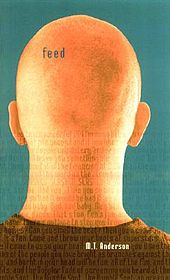
FEED by M T Anderson
It isn’t one specific thing that makes these stories speak the way they do. It’s all the choices the author made because she let go and let herself tell the story with her unique voice.
Now do the same for your WIP. If all you can say about it is what happens in the plot, you probably aren’t letting go. You aren’t letting your voice shine through. As Whitley Abell recommended, “Practice peeling all the untrue parts of yourself away and putting yourself, raw and bared, on the page.”
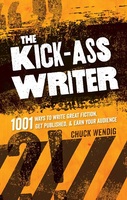 I leave you with one more thought. A horrific one and I should apologize in advance for putting the idea in your head, but… As many of you know, Chuck Wendig is very uninhibited with his authorial voice — both in his novels and in his writing craft books.
Imagine, if you can, if Chuck Wendig had written Jane Eyre.



 Tangled Words