
Monday Advice from Editors and Agents: Develop Interiority

INTERIORITY (according to Merriam-Webster.com) 1) interior quality or character. 2) inner life or substance; psychological existence. First known use: 1701

For a word that’s been around some 300 years, INTERIORITY had never even cleared my event horizon until I discovered it in agent Donald Maas’ top tips for writers.

In his 2012 presentation to the Pacific Northwest Writers Association (PNWA), Maas told his audience about the importance of emotions in connecting readers to our characters. “What engages your heart will engage your reader.” On the surface, this could simply refer to the emotions experienced by our characters in response to the events of the plot. Well-crafted responses, of course; shown, not told.

But apparently, Maas means more than that. He also advises the writer to create the story’s “interiority,” specifically the “emotional landscape” our characters travel through.


THE EMOTIONAL LANDSCAPE

Now I didn’t attend this particular workshop. But I have attended a Donald Maas workshop and I know he probably went into a great deal of detail, with examples, of what he meant. I can’t speculate about that workshop material. But I can tell you what an eye-opener the concept of interiority was for me.

A landscape is so much more than just the path we’re on. It’s all the things that catch our eye along the way. To be literal, it’s even the stuff we never notice, like bugs in the grass and shadows from the birds flying overhead. It’s ALL landscape. Or, you could say it’s all background.

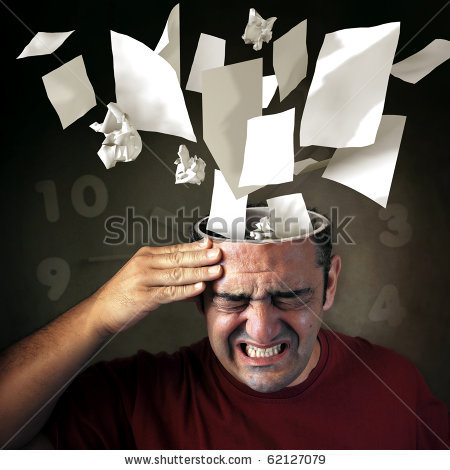
Taking that metaphor to our writing life, the emotional landscape our characters experience becomes much more than just their reactions to the events of the story. It’s the love of family that sustains them in crisis, the fear of falling that makes them take the safe path, the faith in human nature that rules their relationships, the passion for science that leads to their career choices, etc. In other words, it’s the emotional background of their lives, shaped by events that may be long forgotten or even unnoticed.


A VITAL UNDERPINNING
If all we are is just reaction (present us with a problem and see how we respond), then everything that defines us is out there on the surface. Anyone can watch us and know us. If we make a bad choice, it defines us. Talk about superficiality!

This isn’t the way we want the world to work. This isn’t the way we want readers to judge our characters, either.

So we have to give readers more than just character reactions. We have to let the audience know our characters so well they can predict reactions, sympathize with our characters so much they will cry with them, and hope right along with our characters so much they’ll be jumping up and down at their victories. (And just keep turning those pages!)


NOT THE SAME AS BACKSTORY

But, like the unnoticed bugs in the landscape, some of the interiority of a character may not depend on a past event. So revealing it can’t be done through backstory. Here are some ways I’ve thought of to accomplish the emotional landscape reveal:

  • Dig through the grass. As a character is outwardly reacting to a comment or action, reveal the tiny physical/conversational responses that give a clue to the character’s true interior reaction. For example, the stutter that only happens when they’re excited, the blush when they’re embarrassed, the muscle twitch when they’re nervous, the facial tick when they’re angry.
  • Use a wider camera lens. In some scenes, add tell-tale details that might not be necessary for the plot but reveal something about the character’s values/hopes/goals. You might briefly mention the family photos on the desk, the brochure about trekking in the Himalayas, the open Bible on the nightstand.

  • Use a strong flashlight. Put a spotlight on significant details that reveal interiority. Surround the detail with other important bits the reader is sure to remember, such as a turning point decision, a deliberate lie, a relationship-changing argument.
  • Squint. Spend a short time focusing on the character’s interior life. Add a scene that shows the character hoping, fearing, avoiding, lying to him/herself—doing the one thing that most defines them. Don’t take it too far from the plotline, but it doesn’t have to be vital to the plot as long as it advances our knowledge of the character.
 

I’m currently rewriting a book that didn’t succeed. I’m pretty sure the fault lies with my characters. This time, I’m going to make them have richly emotional interiority.


P.S. Donald Maas’ latest book, The Fire in Fiction: Passion, Purpose and Techniques to Make Your Novel Great (May 2009), looks like a great new craft book to explore.

Posted in Characters, Interior life; interiority | Tagged , | Leave a comment

Monday Advice from Editors and Agents: Ask Questions

Ask questions. Good advice for every aspect of life, including writing.

I’ve met new writers who say they only want to write books that don’t require research. News Flash: every book requires you to get your facts right and even fantasy has to be grounded in believable, workable reality.

But what do you do if you want to kill a person with something like laudanum, for instance? Or suppose you need to figure how long it would take to ride a horse from London to Edinburgh? Or put together an Elizabethan after-the-hunt menu? Where do you find those facts?

Websites for Fact-checkers

I’ve just found two exciting new websites for authors. The first is called Little Details – A Fact-Checking Community for Writers. Right now, I’m looking at questions about how many skeins of silk someone reasonably skilled could spin in a night, how long it would take to die from a specific type of brain puncture, and tattoo artist specifics. Each question becomes a stream of answers, comments on answers, more comments, and — hopefully — exactly what the questioner needs. Some of the commenters have advanced degrees in their subject, or are professionals with years of experience. You couldn’t ask for more.

Pretty terrific, huh?

Another resource is the Water Cooler at AbsoluteWrite.com. It operates in a similar manner: post your question, post an answer or comment to someone else’s question in a “thread” or multi-party conversation. You’ll have to register to participate in the conversations but it’s free.

Try them out! Impress your agent or editor with how much you know!

Posted in Fact-checking, Sources | Tagged | Leave a comment

Second Person POV

Stop SignLast week, I read a librarian’s recommendation for a book supposedly written in second person. I was intrigued – both by the POV style and the extremely good 5-star reviews. I downloaded it to my Kindle, and it turned out to be a terrific book — but it was NOT written in second person.

What is Second-Person Narrative?

In part, Point of View (POV) refers to the story (or paragraph, scene, etc.) narrator’s position with regard to the events that are happening. An omniscient POV narrator sees all, hears all, understands all, and can even get inside the head of everyone involved. A first- or third-person narrator works with only what that one character is capable of seeing, hearing and understanding.

But POV also deals with the pronouns used in narration. Both omniscient and third-person narratives use the pronouns HE or SHE in referring to each of the characters. A first person narrative uses only the pronoun I to identify the narrator/central character.

In second-person narratives, the narrator refers to him/herself as YOU. In self-help and how-to books, it’s quite common. In fiction, it’s a bit jarring to read at first. But we’ve probably used this technique before in trying to convince a listener that they can relate to – even perhaps vicariously participate in – what you experienced. Example:

You’re walking along the street when someone you don’t even know calls your name and offers you a ride to the hospital where your mom just got admitted with a heart attack. What are you supposed to do? You can hardly think straight and you’re supposed to decide what to do!

You, the reader, literally become the narrator. It’s a major suspension of disbelief, but when it works, it works superbly well.

What is NOT Second-Person Narrative (but looks suspiciously like it)?

Product DetailsThe book recommended by the librarian is You Don’t Know Me by David Klass (and it’s really, really, really good). It starts with a lot of statements like this one:

You don’t know me at all. You don’t know the first thing about me. You don’t know where I’m writing this from. You don’t know what I look like. You have no power over me.

A lot of second-person pronouns, right? But notice they don’t refer to the narrator. The person speaking is clearly a first-person character. But YOU is obviously a central character, someone terribly important to the speaker.  The story is, in fact, all the things the narrator wants YOU to know but can’t tell YOU. Using an unnamed YOU character makes it feel like the narrator is addressing the reader directly.  In fact, my heart broke early and often in this moving story because I strongly identified with both the narrator and YOU, his mom.

Some Examples of Second-Person Fiction

Product DetailsBright Lights, Big City by Jay McInerney. According to the Amazon book description, “With the publication of Bright Lights, Big City in 1984, Jay McInerney became a literary sensation, heralded as the voice of a generation. The novel follows a young man, living in Manhattan as if he owned it, through nightclubs, fashion shows, editorial offices, and loft parties as he attempts to outstrip mortality and the recurring approach of dawn. With nothing but goodwill, controlled substances, and wit to sustain him in this anti-quest, he runs until he reaches his reckoning point, where he is forced to acknowledge loss and, possibly, to rediscover his better instincts. This remarkable novel of youth and New York remains one of the most beloved, imitated, and iconic novels in America.” It begins:

You are not the kind of guy who would be at a place like this at this time of the morning. But here you are, and you cannot say that the terrain is entirely unfamiliar, although the details are fuzzy.

Product DetailsYou by Charles Benoit

You’re thinking this wasn’t the way it was supposed to go, this shouldn’t be happening. And now things are only going to get worse. You’re just a kid. It can’t be your fault. But then there’s all that blood.

Product DetailsWhy We Broke Up by Daniel Handler (starred reviews from School Library Journal, Booklist, Kirkus Reviews, Publishers Weekly, The Horn Book, etc.)

This story is told as a letter to “Dear Ed.”

In a second you’ll hear a thunk. At your front door, the one nobody uses…   You won’t even know or hear what’s being dumped at your door. You won’t even know why it even happened.

Product DetailsStolen by Lucy Christopher (A Michael L. Printz Honor Book * ALA Best Fiction for Young Adults * A 2011 USBBY Outstanding International Book)

This one is written as a letter from a victim to her captor. It is a desperate story of survival; of how the main character has to come to terms with her living nightmare–or die trying to fight it. It begins:    You saw me before I saw you.

Posted in POV - Point of View, Second Person POV, Using Second Person POV, Writing | Tagged , | Leave a comment

Monday Advice from Editors and Agents: If your first book doesn’t perform well

Sorry, readers. This post is a day late due to my computer “forgetting” my user profile! Thank you, Best Buy, for restoring me.

Books For SaleCurtis Yates is a lawyer AND an agent. He and agency partners Matt and Sealy Curtis blog at http://www.yates2.com/blog/.

Recently, Curtis talked about what you can do to help your career if your first (or last) book tanked.


Publisher Expectations

It’s easy to understand a publisher’s inclination to expect sales of Book A to be somewhat predictive of sales of Book B by the same author. Retailers feel the same way. If they couldn’t get rid of all the copies they ordered of Book A, they’ll certainly order fewer of Book B.

You may feel there were good reasons for the slow sales – a Christmas plot that, for some reason, didn’t reach the shelves until late December, the publisher moved up (or back) the publication date after all the blog tours and autographings were set up, a book with an almost identical storyline by a very famous author came out the same month, etc.  But you can’t resurrect the dead and you need to move on to Book B, which you believe is enormously better than Book A and deserves a bigger print run and bigger push.

How do you convince the publisher that you’re an even better bet now?


Yate’s Advice

“You’ve got to give the publisher some tangible things they can go back and give the retailer as to how your second book is going to outperform the last.”

Yes, but how do you do that? Well, you can start by talking about

  • Your website: Has it been redesigned? Are you updating it frequently with new material? Does it include interactive material and are you getting responses? How many unique visitors per month do you get?
  • Your blog: Are you posting more frequently? How many comments are you getting and how many subscribers? Are you seeking guest blogging opportunities?
  • Social media: How many new followers do you have now on Facebook and twitter? Are you posting regularly, retweeting, etc.? Are you becoming well-known on Goodreads? Do you have an author page on Amazon?
  • Other media: Have you done any vlogs, or spoken at conferences/meetings? Have you written articles for print or online publications?

In other words: How are you working to become better known? If your first book didn’t make you a household word, will what you’re doing right now change that?

It’s tough

Baby Working On A LaptopIf it seems like the publishers are asking you to reach out to your potential new audience IN ADVANCE of Book 2, you’re probably right. It’s like pre-marketing for a newbie author. It’s like being a newbie all over again. Ugh.


 

Posted in Business of Writing, Promotion, The second book | Tagged | Leave a comment

Monday Advice from Editors and Agents – Writing the Synopsis

Help in Crafting a Synopsis

A favorite site of many new writers is www.writersdigest.com. This free website offers even multi-pubbed authors a treasure chest of resources. Today when I checked the site, I found:

  • A preview of the October issue of Writer’s Digest magazine
  • Free articles
    • 3 Steps to Successful  Book Marketing— by a promotional expert
    • Crafting Fiction and Memoir That Sells—an agent’s point of view
    • Interview with author Jill Hathaway (YA novel SLIDE) plus giveaway
    • plus access to past articles
    • FREE download of 101 Best Websites for Writer
    • Editor blogs
    • Contests and competitionsA “featured website” for writers
    • Craft education, including
      • List of upcoming Boot Camps, Live Webinars and Tutorials
      • List of FREE writing downloads
      • September workshops

And lots more…. See what I mean?

A Downloadable Webinar

One of the On-Demand Webinars offered by WD is The Dreaded Synopsis ($79). The download includes samples of good and bad synopses. If that cost is too high, you can find the highlights at Learn How to Write a Synopsis Like a Pro. There’s a lot of good information there, from Jane Friedman,  WD’s publisher and editorial director.

Ms. Friedman recommends that one to two pages, single spaced, should be sufficient. She also recommends a three-paragraph format:

  • Identification of protagonist(s), problem or conflict, and setting
  • Major plot turns or conflicts
  • Resolution of major conflicts

Notice there is no mention of backstory, small subplots, and subsidiary-but-interesting characters. Nor is there a suggestion to start/end with a hook.

Friedman also DID NOT SAY IT HAD TO BE IN CHRONOLOGICAL ORDER. More on that in a minute.

Secrets to Making It Short

Of course the second part, about major plot turns/conflicts, might need to be divided into more than one paragraph to accommodate complex plots or multiple character arcs, etc. But even so, you may look at your 400-page masterpiece and wonder how in the world you can get it down to two pages, even single-spaced. And you may be very fond of that backstory and the humorous sidekick.

What to do? The key is in making every sentence work as hard as it can.

In 1891, as Queen Victoria approaches her 75th year, a plot is hatched by Harry Bacon to gain control of her heir, the not-very-bright Prince Albert Victor. When Harry steals the prince’s bastard child through powerful dark magic, the child’s mother, Deborah Kettle, seeks someone even more powerful to get him back—the London sorcerer Jeremy Trumbull.

In this very short paragraph (54 words) we have established the main characters, the time and setting, and the central conflict of the story. In mentioning magic and sorcery, we’ve also established the genre of the novel.

The first sentence of the synopsis gives us needed background for the following account of story action. That one sentence is all the backstory we need. It doesn’t matter that this information isn’t revealed until many chapters into the book. The second sentence puts us into the action of the plot, spells out the problem, names the major protagonists and establishes their relationship to each other. That’s a lot of work for 54 words to do.

And since you’ve been so economical thus far, you can splurge a little on the next paragraph or two—the ones that describe the entire middle of the book. After all, two pages, single-spaced, is around 1,000 words. You’ve still got 950 words left!

What about that humorous sidekick? Deal with him quickly (one sentence or less) and you can probably get away with mentioning him. In fact, deal with every part of your story as tightly as that first paragraph and you may even be able to whittle your synopsis down to contest-entry length—one page.

Oh, and don’t forget to tell how it all ends. No editor/agent wants to be left hanging.

Posted in Resources, Synopsis, Synopsis, Writers Digest | Leave a comment