How to Build a Coming of Age Arc

walking_away morguefile free photoSome of the most famous books ever written have been about finding oneself while on the journey to adulthood.

  • To Kill a Mockingbird by Harper Lee
  • The Giver by Lois Lowry
  • A Tree Grows in Brooklyn by Betty Smith
  • Lord of the Flies by William Golding
  • The Catcher in the Rye by J. D. Salinger
  • Great Expectations by Charles Dickens
  • Jane Eyre by Charlotte Bronte
  • The Red Badge of Courage by Stephen Crane

The story never grows old. Authors are still crafting riveting stories by exploring this journey and what it means. The number of recent examples is incredibly long. (Check Goodreads for all the books readers have identified with this tag.) I did a quick search and found the Coming of Age arc in every genre, including

  • The Perks of Being a Wallflower by Stephen Chbosky (contemporary, female POV)
  • The Absolutely True Diary of a Part-Time Indian by Sherman Alexie (contemporary, male POV)
  • Ender’s Game by Orson Scott Card (science fiction)
  • The Harry Potter series by J. K. Rowling (fantasy)
  • Eleanor and Park by Rainbow Rowell (romance)
  • The Book Thief by Markus Zusak (historical)

THE COMING OF AGE STORY

The reason this story never grows old (I think) is that the first time Real Life Happens to young people, it’s over-the-top important. It’s fresh and raw and brand new for everyone — and a true case of “this changes everything.”

It’s no coincidence the external stories that surround this character arc are all about “firsts.”

  • The first experience with death.
  • kiss  morguefile free photoThe first kiss.
  • The first time being held accountable for something important.
  • The first time making a decision that affects others.
  • The first really big mistake that couldn’t be fixed.
  • The first time you fought back when the world kicked you.
  • The first time you had the courage to believe in yourself.

THE COMING OF AGE ARC

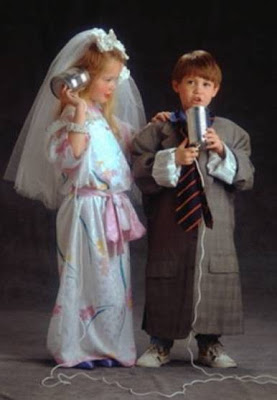
The basic character arc is movement from the unaware state of a child to the fully aware state of an adult. It’s a bittersweet arc because the goal (maturity) does not always bring happily ever after. Examples of such character movement include:

  • children playing dress up reFrom innocence/naivete to awareness of corruption/evil
  • From uninhibited enjoyment to acquired restraint (with perhaps some loss of joy)
  • From unseeing/unaware of certain aspects of life to aware and fully participating or reacting
  • From reckless to accountable
  • From living in-the-moment to planning a future
While this arc is frequently about making hard choices, the hardest one of all is to grow up. There is always the temptation to stay in the known, protected by others. Safe. So some of the steps on such a journey may include (but are not limited to)

  • Awakening to reality
  • Preferring wishes/dreams/avoidance (immaturity) to dealing with reality
  • Discovering perks/benefits of dealing with it
  • Discovering downsides/pain associated with it
  • Reaching the point where a decision has to be made
  • Building up the courage to do a hard thing
  • Choosing to move forward
  • Receiving the rewards/penalties of adulthood (maturity)
  • Looking forward to the future

This often-quoted verse from Corinthians 13:11 sums it up nicely. “When I was a child, I used to speak like a child, think like a child, reason like a child; when I became a man, I did away with childish things.”

I hope this helps those of you asking about this particular arc.

     What are your favorite modern coming-of-age stories?

Posted in Character arcs, Coming of Age stories, Coming of Age stories, Genre elements, Genre recipes, Interior life; interiority, Plotting, Young adults | Tagged , , , | Leave a comment

Monday Advice from Agents and Editors: An Editor’s Take on Criticism

The Wakeup Call

Many new authors, shiny new publishing contract in hand, think all the hard work is over. And then they get the first editorial letter. The one that’s a dozen pages long. The one that starts “I really love this” and then goes, “But there are a few things I think you need to change.”

worry tinyIt’s even worse if the writer has won some contests and has an agent who keeps saying he/she is brilliant. (Note: that’s what agents are supposed to do.)

If I’m so brilliant, why is there so much red ink on my manuscript?

Constructive Criticism

annemcneill            Today’s comments come from editor Anne McNeil, Publishing Director at Hachette Children’s Books, speaking at the Mountains to Sea Book Festival in Ireland this year. She talks about the role of the editor in shaping the final book.

McNeil believes even an “immensely strong” writer, like writer David Almond, celebrated for award-winning children’s and young adult novels, can benefit from a fresh look by an editor. She said this with Almond sitting right beside her. In fact, Almond himself said a writer needs “a sense of someone beyond [himself]” – being part of a publishing team.

Editing is not a simple job. One of the complexities, according to McNeil, is “stripping a book down to its nuts and bolts.” Similar in concept to that discussed in my blog on killing your “darling, puffy babies,” this part of the job may involve taking out dialog or whole scenes that don’t move the story forward—in the opinion of the editor.

This horribly bruising experience may be accompanied by the editor’s suggestions to expand some parts of the story, broadening the author’s vision.

McNeil calls her approach, “constructively critical,” hopefully ending up with “the best of what the author wants.” Notice, she didn’t say everything the author wants.

Sometimes You Just Have to Trust the Editor

In an earlier interview, McNeil said

            Astonishingly, passion still lies at the heart of this business. This, coupled with a good awareness of market – and a tenacity about putting the original voices at the heart of what we do. It’s not a science, although nowadays we do mix intuition with strong consumer data.

graph, chart, bar, office, business, company, market, stock            Hmm. Strong consumer data. Sounds like something that could turn a good book into a bestseller. Something an editor would know and an author might not.

McNeil also mentioned that today’s editors have to take a “360 degree” view of each project – looking at apps, enhanced e-books and other digital platforms. Something else authors might not know much about.

When you add everything up, all that red ink might actually be a good thing.

Posted in Criticism, Editing, Editorial Criticism, Revising, Taking out fluff | Tagged , , , | Leave a comment

Writing Swordfights

Today I saw a terrific post on writing swordfights over at Book Wars (“unadulterated fangirling of children’s books, authors, and bookstores”). It made me recall the two Fencingsemesters I took fencing in college and the aching, burning thigh muscles that came with learning to duel for twenty minutes or more in classic form–which means legs bent in a semi-crouch, never standing up straight, even at rest. The pose gives the fencer tremendous speed and reach, along with agility, and flexibility. But sometimes it was hard to walk afterward.

I’m recommending this post for anyone who writes fantasy, historical adventure, gritty urban gang stories or even middle school playground battles. In short, for anyone who needs to write a powerful fight scene. Why?

Three dimensions and three levels of reader engagement

Janet

Janet

The blog from Janet was about three authors who learned how to fight with swords (and wooden spoons) so they could write realistic swordfight scenes. They discovered that visceral feel, all the way up the arm, of two blades impacting each other; how quickly a swordfight, and a life, can end; and how the intent of each antagonist can impact his or her ability to win. Good lessons all.

But for me, the most insightful lesson came from Sebastien de Castell, author of The Greatcoats fantasy series. His advice, to more fully involve the reader, is to use three different scales or levels of action in each fight:

  1. The very large view (“They fought like dragons…”)
  2. The middle view (“Chris threw a roundhouse punch at my face”)
  3. The micro view (“The first thing I saw were the hairs on his knuckles as…”)

De Castell recommends writing on all three scales. For instance, you might begin at micro (up close and personal), move to medium (pure mechanics), then to large (win/lose), and end with micro for an intensely personal effect on both the fight participant and the reader.

Don’t forget INTENT as a factor

One of the other sword students was Kris Sayer who is writing and posting a serial fantasy comic, Tatterhood. Since she is both describing and illustrating each scene, she also considers the intent of the people her protagonist faces, and how that affects the way they fight. (BTW, Kris is the one whose character fights with a wooden spoon.)

Example: A furious antagonist seeking ultimate vengeance confronts a confused pacifist who is only trying to avoid being killed. The intent of each can influence everything about their duel: its duration, intensity and outcome, as well as the individual moves each makes to achieve the two different goals.

And fatigue, too

Remember adrenaline can only take a body so far. Eventually, the stress of an extended fight scene will take its toll on muscles and mental sharpness.

One last piece of advice: Practice acting out a relatively unimportant scene as both participants, letting each character’s intent drive your decisions to act and react. Do it over and over until you’re too tired to hold that sword (or wooden spoon). Then, when you’re at your lowest, try for the final climactic scene, the one that takes everything your character’s got and demands even more.


Posted in Action, Swordfights, Writing | Tagged , , , | Leave a comment

Alex award Winners

The ALA/YALSA Alex Award winners have been announced. These are adult books for teen readers. I haven’t seen any of these… but I’m adding several to my TBR list.

Kathy Temean's avatarWriting and Illustrating

Alex-AWARDSWinner_lowres•All the Light We Cannot See, by Anthony Doerr, published by Scribner, a division of Simon & Schuster, Inc. (9781476746586). A blind Parisian girl and an orphaned German boy conscripted by the Nazis for his radio skills meet in the chaos of the American bombing of a French coastal resort.

•Bellweather Rhapsody, by Kate Racculia, published by Houghton Mifflin Harcourt Publishing Company (9780544129917). High-school students gather at the isolated Bellweather Hotel for a statewide music festival only to be trapped by a blizzard with an arrogant fingerless conductor, drunken chaperones, a missing corpse, and perhaps the ghosts of long-dead newlyweds.

•Bingo’s Run, by James A. Levine, published by Spiegel & Grau, an imprint of the Random House Publishing Group, a division of Random House LLC, a Penguin Random House Company (9781400068838). The ultimate hustler, Bingo uses his brains and charm to run drugs in a Kenyan slum…

View original post 432 more words

Posted in Writing | 2 Comments

What Makes a Reader and Character Connect

I enjoyed this post from Ryan Lanz on character development. (P.S., Ryan also has a terrific set of resources at http://ryanlanz.com/writers-toolbox/

Posted in Uncategorized | Leave a comment